Prague Solo: A Woman's Guide
Prague Solo: A Woman's Guide to Navigating the City of a Hundred Spires
6 min read
Prague Solo: A Woman's Guide to Navigating the City of a Hundred Spires
If you're a woman considering a solo trip to Prague and wondering whether you can actually do it alone, what it'll cost, and whether it's worth the hype—this guide is for you. Prague is the capital of the Czech Republic, famous as a city break hotspot with a reputation for attracting stag and hen parties. I didn't encounter many of these during my visit and generally found it calmer and easier to navigate solo than I'd expected.
Day One: Getting Lost in the Old Town
My first day centred around Prague's Old Town, where the famous Astronomical Clock takes pride of place. This 600-year-old marvel isn't just beautiful—it's a functioning piece of history. Every hour, a skeleton rings a bell, the Apostles parade past the windows, and crowds gather to watch the spectacle unfold. I'd recommend reading up on how to actually interpret the clock before you go, as understanding its mechanics makes the experience far more meaningful.
The Old Town Square is surrounded by stunning churches and synagogues, with Týn Church and its distinctive Gothic spires dominating the skyline. I spent hours simply wandering the cobbled streets, popping into various historic buildings and soaking up the atmosphere. If you have time and energy left, consider visiting the National Museum. It offers spectacular views overlooking Wenceslas Square, though be prepared for the climb to get there.
The day was tiring, but these are Prague's essential sights—absolutely worth seeing and impossible to skip.
Day Two: The Castle and the Bridge
Day two was all about Prague Castle, but fair warning—getting there involves climbing several hundred steps. It genuinely felt like an endless ascent. There are buses that cross the river and stop at the foot of the castle if you want to minimize the climbing, or you can walk across the Charles Bridge and approach the castle that way. Both options have their charm, though neither completely spares your legs.
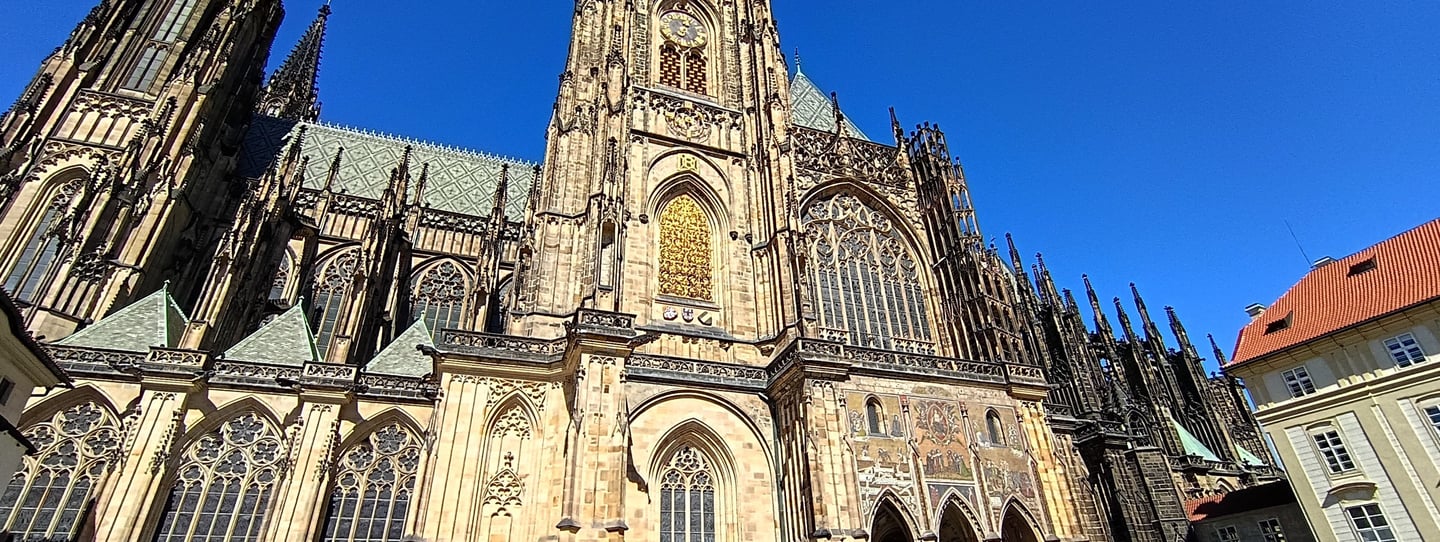
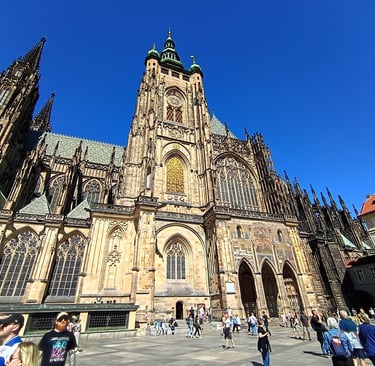
The castle complex isn't just one building—it's an entire neighbourhood of historic structures. The crown jewel is St. Vitus Cathedral, an absolutely breathtaking Gothic masterpiece. You can wander the complex grounds for free, but if you want to enter the main buildings, you'll need to purchase a ticket. If you time it right, you can catch the changing of the guards, and the gardens are worth exploring if you're not completely exhausted. Plan to spend at least half a day here—rushing through would be a disservice to the experience.
If you're short on time or energy, know that the castle is physically demanding but remains the city's standout attraction. I'd prioritise it over other sites if you have to choose.
On the walk back across the Charles Bridge, I stopped frequently to photograph the incredibly detailed statues that line its length. Make sure you find the statue of St. John of Nepomuk and touch the dog on the brass plaque beneath it. According to local legend, this ensures you'll return to Prague. Whether you believe in such things or not, it's become a tradition, and the bronze is worn smooth from countless hopeful hands.
In the evening, I decided to ride Tram 22 along the river. It's basically a budget sightseeing tour that winds through some of the city's most beautiful areas. This is a bargain at 30 CZK for 30 minutes or 40 CZK for 90 minutes, or it's included with the 24-hour (120 CZK) or 72-hour pass (330 CZK). I ended my night in the New Town area, where I discovered some quirky spots—including places where cannabis is actually legal, if that's your thing.
Day Three: The Parts You Might Have Missed
My final day was about covering the areas I'd missed, including the fascinating Kafka rotating head sculpture—a kinetic installation that's as unsettling as it is mesmerising. I also made my way to the John Lennon Wall, covered in colourful graffiti and Beatles-inspired artwork, and explored the Jewish Quarter on the other side of the river.
If you want something completely different, venture out to the Petřín Lookout Tower—Prague's answer to the Eiffel Tower. It's a bit further from the centre, but offers fantastic views. There's even a zoo if you fancy spending time with animals instead of tourists.
Getting Around Prague
Prague's public transport system is excellent. Buses, trams, and metro trains make getting around incredibly convenient. Tickets cost:
30-minute ticket: 30 CZK (about £0.90)
90-minute ticket: 40 CZK (about £1.20)
24-hour pass: 120 CZK (about £3.60, unlimited travel)
72-hour pass: 330 CZK (about £10, unlimited travel)
While you can purchase multi-day passes, I found them unnecessary for a short trip focused on a few key areas.
I stayed at Hotel Attic in the 4th district near Pankrác, which has both metro and tram connections straight to the city centre. I took the bus as the stop was closer to the hotel and involved less walking. The journey took about 30-40 minutes to the main attractions, but the convenience and frequency of transport made it an acceptable trade-off.
One crucial tip: validate your tickets when you board or at the station. You can buy tickets via apps, but I found this unnecessarily complicated for just a few days. The old-fashioned paper tickets worked perfectly fine.
Where to Stay
I chose to stay outside the city centre in the 4th district, which proved to be excellent value. Hotel Attic included breakfast, which was a significant money-saver, and while it meant travelling 30-40 minutes to reach the main sites, the transport connections made this perfectly manageable. The bus stop was about a ten-minute walk away, and the tram was slightly further.
One thing to note: there's a city tax of 50 CZK (around £1.50) per person, per night that must be paid directly at your accommodation, separate from your booking price. It's not a huge amount, but worth budgeting for.
The Money Talk
Prague was more expensive than I expected—definitely pricier than Krakow, particularly for attractions—but still manageable on a budget with planning. Here's exactly what I spent over three nights:
Train from Krakow (overnight): £18.07
Hotel (3 nights): £106.27
Transport (3 days): £10.80
Food (3 days): £41.01
Prague Castle ticket: £16.21
Miscellaneous: £23.43
Total: £215.79
The overnight train from Krakow, booked through Trainline, was an economical choice that also saved a night's accommodation. My transport costs mainly covered bus travel, except for the first day when I purchased a 24-hour pass from the main train station.
The breakfast included with my accommodation was a lifesaver for my food budget—I took full advantage of the buffet each morning. The castle ticket cost 450 CZK (£16.20) for the 'Circuit B' pass, which covered entry to St. Vitus Cathedral, the Old Royal Palace, St. George's Basilica, and the Golden Lane within the complex. My miscellaneous expenses covered things like laundry.
Cash, Cards, and Data
The Czech Republic uses the Czech koruna (also known as the Czech crown), despite being part of the European Union. Cards are accepted almost everywhere, and I never actually needed cash. You can buy bus tickets with your card directly on the bus, and train tickets at the machines in the stations.
Safety First
I felt safe throughout my time in Prague, even at night. The city is well-lit, and there are always people around. I stayed outside the main tourist centre, and while arriving at my hotel in the dark initially felt uncertain; I chose an alternative route along busier streets with the bus stop close by, which made me feel more comfortable.
That said, be vigilant about pickpockets in crowded tourist areas. Keep your bag in front of you and your phone secured.
What I Learned the Hard Way
I wrongly assumed most people would speak English everywhere. While this is true in tourist hotspots, it's less common once you venture into residential areas. Fortunately, most Czechs are friendly and helpful, and the Google Translate app saved me more than once.
Leave the heels at home. Prague's cobblestone streets and uneven pavements are designed to destroy ankles. Comfortable walking shoes are non-negotiable.
If you're planning a longer trip, stay somewhere with laundry facilities. Finding a launderette proved surprisingly difficult, especially one with English instructions. I eventually found one, but had to buy washing powder from a supermarket—and it only came in enormous sizes. A friendly fellow laundry-washer ended up sharing hers with me.
I arrived in the city early but had a late check-in, which meant leaving my luggage and wandering around for hours. After an overnight journey, this was exhausting, and I didn't fully enjoy the sightseeing. I crashed hard that night, though, which was honestly needed.
Finally, if your accommodation includes breakfast and you're travelling on a budget, load up at the buffet. I treated it as my main meal of the day and got by with snacks and a light dinner.
Pro tip: I found my affordable hotel through a comparison site, which helped me balance cost with quality. Keeping all my bookings organised in one simple travel planner—bookings, transport notes, budgets—removed a lot of the mental load, and I highly recommend doing the same. Without that, it would’ve been overwhelming, especially moving between cities.